2025-11-10
Dr. Carlos Collet, MD, PhD, points out that the importance of non-invasive coronary CT angiography (CCTA) is increasing day by day. As a senior expert in cardiac imaging technology, Dr. Collet currently serves as the Director of Cardiovascular Imaging, Physiology, and Translational Therapeutics at the Cardiovascular Research Foundation. He believes that CCTA, as a diagnostic tool, is likely to become a core device in the catheterization laboratory in the future.
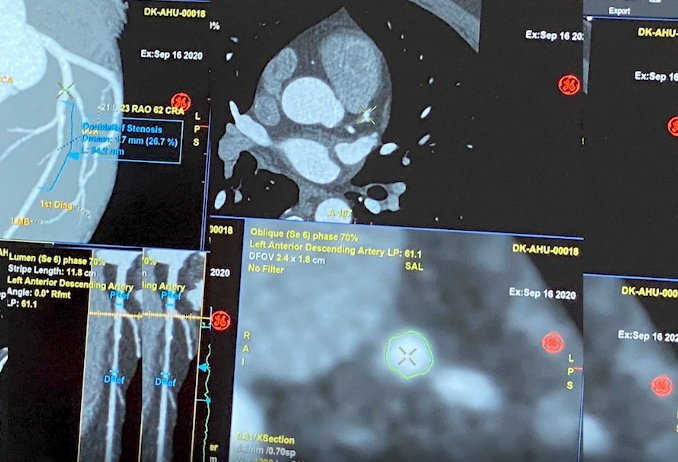
During an interview with Cardiovascular Business magazine, Colette stated that advancements in image quality, artificial intelligence, and physiological modeling have enabled doctors to plan percutaneous coronary intervention (PCI) procedures more effectively, potentially eliminating many diagnostic angiography steps. At the TCT 2025 conference in San Francisco, she further explained that coronary CT is highly beneficial for understanding coronary artery disease before catheterization procedures and can help doctors tailor treatment plans for patients.
According to Colette, nowadays, AI-based software tools and emerging plaque characterization algorithms can generate detailed angiographic roadmaps and virtual physiological models before the patient enters the catheterization laboratory. She emphasizes that the current trend in this field is moving towards performing coronary CTA prior to catheter insertion to obtain anatomical and physiological data for personalized treatment strategies.
"Both AI-driven CT software and hardware components have made progress, resulting in clearer images and more accurate assessments of plaque analysis and physiological aspects," Colette said, "Now we can utilize AI to understand the causes behind stenosis, such as whether there is a lipid core plaque or calcification."
Colette also pointed out that CCTA can not only provide functional and anatomical data, but also perform risk stratification based on plaque composition. Furthermore, CCTA serves as the foundation for the transformation of longitudinal management of coronary artery disease, allowing doctors to monitor plaque regression or progression over time and evaluate the effectiveness of medication. In the catheterization laboratory, CCTA will play an increasingly important role in better managing severely calcified lesions.
Source: China Nuclear Technology Network


Address:Ping An Fortune Center, Lize Financial Business District of Beijing